By Lindsey Baxter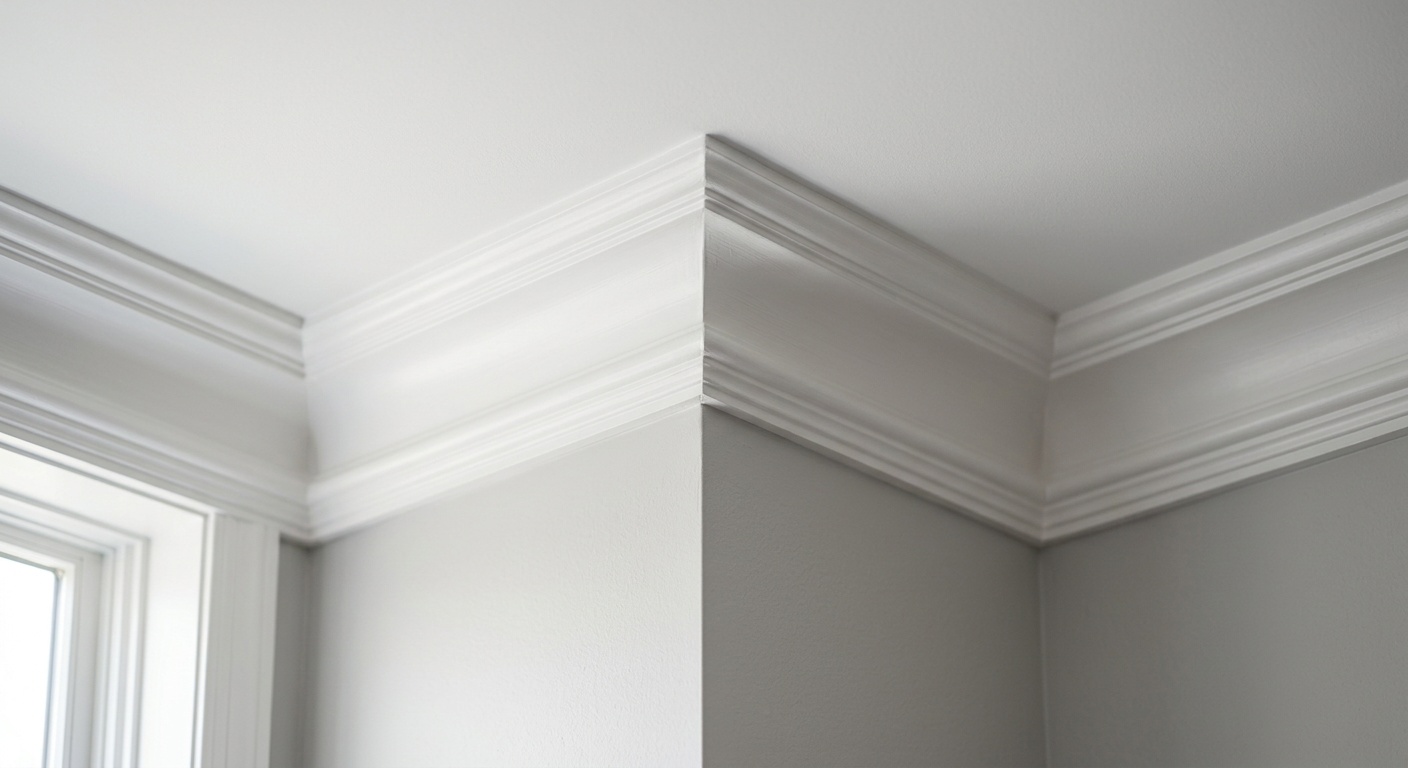
How to Install Crown Molding for an Instant Room Upgrade
Reading time: 14 minutes
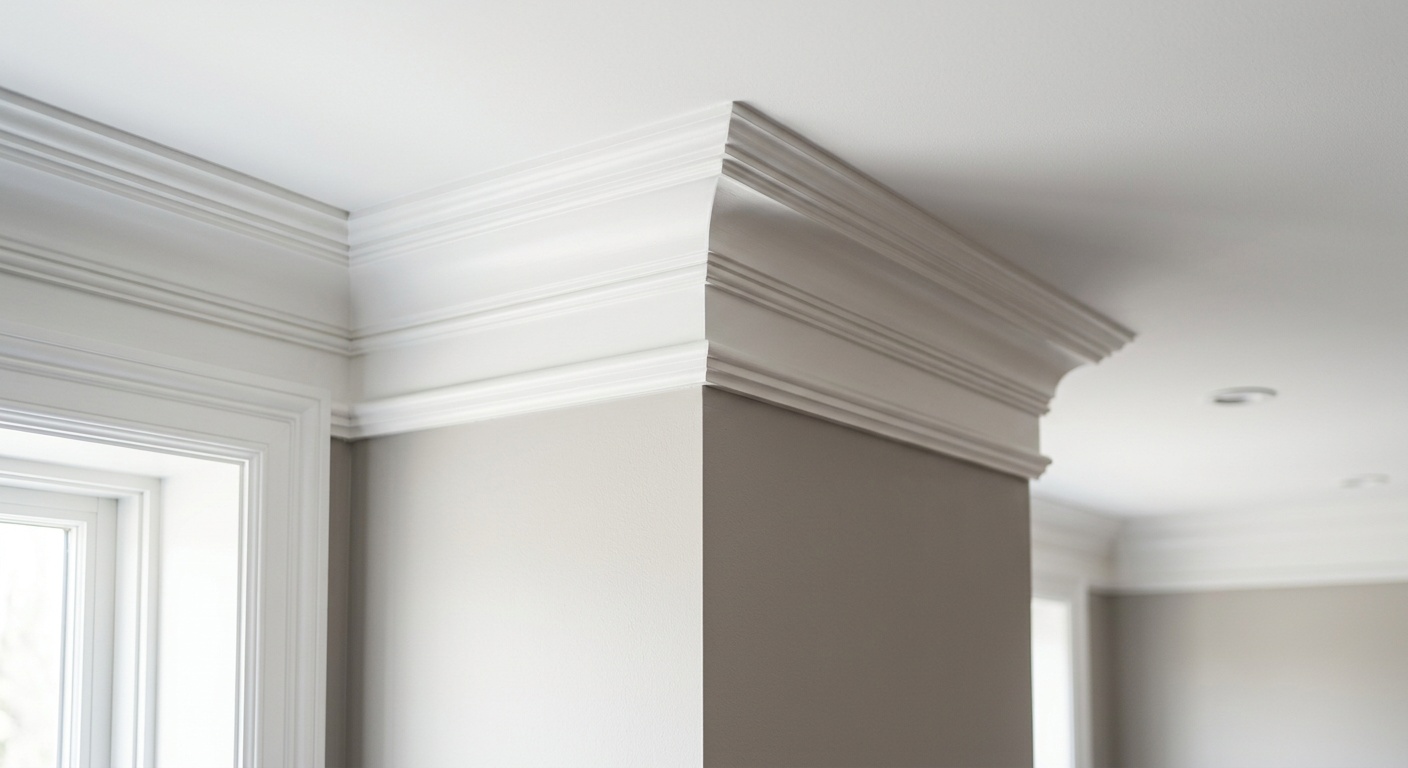
Ever walked into a room and felt something was just off — like the space had potential but never quite delivered on the promise? More often than not, the missing ingredient is crown molding. That elegant transition between your wall and ceiling is one of the most cost-effective ways to add architectural character, visual height, and a polished, finished look to any room — and in 2026, it’s having a serious renaissance.
Here’s the straight talk: Crown molding installation intimidates most homeowners. The angles are confusing, the math feels scary, and one wrong cut can waste an expensive piece of material. But with the right approach, the right tools, and a clear roadmap, you can absolutely do this yourself — and the payoff is enormous.
Quick Scenario: Imagine you’re preparing to sell your home in 2026’s competitive real estate market, where buyers expect elevated finishes even in mid-range homes. What’s one weekend project that adds perceived value far beyond its actual cost? Crown molding — every time. Let’s turn that intimidation into execution.
Table of Contents
- Why Crown Molding Still Dominates in 2026
- Tools & Materials You’ll Actually Need
- Choosing the Right Profile for Your Space
- Measuring, Planning & Avoiding Costly Mistakes
- Cutting Techniques: The Angles Explained
- Step-by-Step Installation Guide
- Finishing Touches That Make It Look Professional
- Common Challenges & How to Overcome Them
- Frequently Asked Questions
- Your Crown Molding Action Plan: From Bare Walls to Beautiful Rooms
Why Crown Molding Still Dominates in 2026
Crown molding isn’t a trend — it’s a timeless architectural element. But in 2026, it’s experiencing a notable surge in demand driven by a convergence of factors: the post-pandemic home improvement boom that peaked in 2024 continues to fuel renovation enthusiasm, interior design trends have shifted back toward warmth and craftsmanship, and the rise of AI-assisted home design tools has made homeowners more aware than ever of the finishing details that separate good rooms from great ones.
According to the National Association of Realtors’ 2025 Home Remodeling Impact Report, interior trim work — including crown molding — ranks among the top 10 projects for perceived home value increase, with an average cost recovery rate of 85–92% at resale. Meanwhile, a 2025 Houzz Renovation Trends Study found that 67% of homeowners who completed living room upgrades in 2025 included some form of architectural millwork, with crown molding cited as the most popular single element.
The design world in 2026 is embracing what interior designers call “quiet luxury” — spaces that feel refined without being ostentatious. Crown molding fits this aesthetic perfectly. It whispers sophistication rather than shouting it.
The ROI Argument Is Compelling
Let’s talk numbers. A typical 12×14 foot bedroom can be completely transformed with crown molding at a material cost of roughly $80–$150 if you use paint-grade MDF or finger-jointed pine. Even hiring a professional carpenter for the same room typically runs $300–$600 in 2026, depending on your region and ceiling height. Compare that to the $1,500–$4,000 cost of other “instant upgrade” projects like new light fixtures and paint, and the value proposition becomes crystal clear.
Design Versatility Across Every Style
One of crown molding’s greatest strengths is its adaptability. A simple 2¼-inch cove molding feels perfectly at home in a minimalist Scandinavian-inspired space. A grand 5½-inch colonial profile with dentil detail commands attention in a traditional formal dining room. In 2026, designers are also experimenting with painted two-tone molding — white molding against a deeply colored ceiling — which has become one of the most-shared interior design ideas on platforms like Pinterest and Houzz.
Tools & Materials You’ll Actually Need
Before you buy a single piece of molding, make sure your toolkit is ready. Attempting crown molding with inadequate tools is the number one reason DIYers end up with gaps, misaligned joints, and frustration.
Essential Tools Checklist
- Miter saw (compound miter saw strongly recommended): A 10-inch or 12-inch compound miter saw is the single most important tool. It allows you to cut both the miter angle and the bevel angle simultaneously.
- Tape measure: A 25-foot, lockable tape measure is ideal.
- Stud finder: You’ll need to locate wall studs and ceiling joists for secure attachment.
- Pencil and chalk line: For marking your reference lines on the wall and ceiling.
- Nail gun (or hammer and finishing nails): A pneumatic finish nailer dramatically speeds up the process. Alternatively, 2-inch and 2½-inch finishing nails driven by hand work fine.
- Caulk gun and paintable caulk: Your best friend for hiding small gaps.
- Wood filler or spackling compound: For nail holes and minor imperfections.
- Sandpaper (120 and 220 grit): For smoothing filled areas before painting.
- Level and a laser level (optional but helpful): For ensuring your reference lines are straight.
- Safety glasses and hearing protection: Non-negotiable when operating a miter saw.
Material Selection: What to Buy
- Paint-grade MDF molding: Most affordable, takes paint beautifully, does not expand/contract with humidity changes as dramatically as solid wood. Best for most interior applications.
- Finger-jointed pine: Slightly more rigid than MDF, paintable, moderately priced. Good middle-ground option.
- Solid wood (poplar, pine, oak): Best for stain applications or high-humidity areas. More expensive and requires more careful acclimation.
- Polyurethane/foam molding: Lightweight, pre-primed, easiest to cut. Great for beginners or very ornate profiles that would be cost-prohibitive in wood.
Pro Tip: Always buy 10–15% more material than your measurements indicate. Mistakes happen, particularly on inside corners, and running back to the store mid-project for one more piece is a workflow killer.
Choosing the Right Profile for Your Space
Crown molding profiles range from simple and understated to elaborately detailed. The right choice depends on three factors: your room’s architectural style, ceiling height, and personal taste.
| Profile Type | Best Room Style | Ideal Ceiling Height | Difficulty Level | Avg. Cost (per LF) |
|---|---|---|---|---|
| Simple Cove | Modern, Minimalist | 8–9 ft | Beginner | $0.80–$1.50 |
| Colonial/Classic | Traditional, Transitional | 9–10 ft | Intermediate | $1.50–$3.00 |
| Dentil Detail | Formal, Victorian | 10+ ft | Advanced | $3.00–$6.00 |
| Craftsman (Flat-Profile) | Arts & Crafts, Bungalow | 8–9 ft | Beginner | $1.00–$2.00 |
| Polyurethane Ornate | Mediterranean, Eclectic | 10+ ft | Intermediate | $4.00–$9.00 |
A general rule of thumb: The width of your crown molding should be roughly proportional to your ceiling height. For 8-foot ceilings, 2¼ to 3½ inches is typically ideal. For 10-foot ceilings, 4½ to 6 inches works beautifully. Going too large in a low-ceilinged room creates a visually top-heavy, cramped feeling — the exact opposite of what you want.
Measuring, Planning & Avoiding Costly Mistakes
This is where projects are won or lost. Take your time here — measure twice (or three times), and cut once.
How to Measure Your Room
Start by measuring the length of each wall at the ceiling line. Do not assume walls are perfectly straight or that opposite walls are exactly the same length — older homes especially tend to have subtle variations. Add all four wall measurements together to get your total linear footage, then add 15% for waste.
Important: Note which corners are inside corners (walls meeting inward, most common) and which are outside corners (walls projecting outward, like a bay window or fireplace bump-out). These require different cutting angles and different planning strategies.
Creating a Cut List Before You Touch the Saw
Sketch a simple overhead diagram of your room. Label each wall with a letter (A, B, C, D going clockwise). For each piece, note: wall length, left corner type (inside or outside), right corner type (inside or outside). This becomes your cut list and prevents the expensive mistake of cutting a piece for the wrong wall.
Pro Tip: Start installation on the wall directly opposite the room’s main entry point. This wall will be at eye level when you first enter, so it’s worth starting on a wall where any minor imperfections will be behind you as you enter rather than at center stage.
Cutting Techniques: The Angles Explained
This is the section most tutorials bury in jargon. Let’s keep it clear and practical.
Understanding Spring Angle
Crown molding is not installed flat against the wall — it “springs” away from both the wall and the ceiling at an angle, typically 38 degrees or 45 degrees (this is called the spring angle and is printed on the back of most molding). This spring angle is why the cuts are more complex than regular baseboard or door casing.
The Two Methods: Flat vs. Nested
Method 1 — The Nested Method (Highly Recommended for Beginners): Position the molding in the miter saw upside down and at the spring angle — resting against the fence of the saw exactly as it will rest against the wall and ceiling when installed. In this position, you cut simple 45-degree miters on a flat table without any bevel adjustment. Many experienced carpenters swear by this method for its simplicity and accuracy.
Method 2 — The Flat Method (Better for Complex Situations): Lay the molding flat on the saw table and set compound angles — both miter and bevel simultaneously. This requires a reference chart (widely available online and on many miter saw tables) but allows you to cut crown molding on a standard miter saw without needing to spring it against the fence. It’s more versatile for unusual spring angles and non-90-degree corners.
Inside vs. Outside Corners
- Inside corners: You have two options — coping or mitering. Coping (cutting one piece square and cutting the mating piece to follow the profile of the first) is the professional standard because it accommodates imperfect corners far better than mitered joints. Mitering inside corners (two 45-degree cuts meeting) looks great initially but often opens up as wood expands and contracts with seasonal humidity changes.
- Outside corners: Always miter these. Two pieces with complementary 45-degree cuts (or the appropriate compound angles) meeting at an outside corner create a sharp, crisp joint that looks beautiful when done correctly.
Case Study — The Dining Room Transformation: Sarah M., a homeowner in Nashville, Tennessee, tackled her formal dining room in late 2025. The room had three inside corners and one outside corner where a bay window projected into the space. She used the coping method on all inside corners and standard miter cuts on the outside corner. Total material cost: $112. Total time: one Saturday afternoon plus two hours Sunday morning for caulking, filling, and painting. Her verdict? “It made the room look like we spent $5,000 on a renovation. Our realtor said it was the single most impactful upgrade we made before listing.”
Step-by-Step Installation Guide
With your tools ready, materials purchased, and cuts planned, here’s your execution sequence.
Step 1: Find and Mark Your Studs and Joists
Use a stud finder to locate all wall studs (typically 16 inches on center) and ceiling joists. Mark them lightly with pencil just below and above where the molding will sit. These are your nailing targets — nailing into drywall alone will not hold the molding securely over time.
Step 2: Draw Your Reference Line
Determine how far down the wall your molding will sit (determined by the molding’s wall height measurement, found on its packaging). For a 3½-inch colonial crown with a 38-degree spring angle, this is typically about 2¼ inches down from the ceiling. Snap a chalk line around the entire perimeter of the room at this height. This line ensures your molding sits consistently level even if your ceiling has slight variations.
Step 3: Start with the First Wall (Opposite Entry)
Cut your first piece to length with square cuts on both ends if it runs wall-to-wall into inside corners. Hold it in position along your reference line and nail it into studs (through the wall flange) and into ceiling joists (through the ceiling flange) using 2-inch or 2½-inch finish nails. Sink nails every 16 inches along each flange.
Step 4: Cope the Adjacent Pieces
For rooms with only inside corners (most standard rectangular rooms), cut the first piece of each adjacent wall with a square end that butts into the installed piece. Then cope the other end: make a 45-degree inside miter cut (which exposes the profile), then use a coping saw or jigsaw to cut along the profile line, removing the back portion. The resulting coped end fits snugly over the face of the installed molding. Test the fit, adjust if needed, then nail into position.
Step 5: Handle Outside Corners with Compound Miters
For outside corners, dry-fit both pieces before nailing anything. Mark the meeting point carefully — outside corners are unforgiving because any gap is visible from multiple angles. Apply a small amount of wood glue at the mitered joint in addition to nailing both pieces, and use a clamp or blue painter’s tape to hold the joint together while the glue sets.
Step 6: Fill, Caulk, Sand
Once all pieces are nailed in place, fill nail holes with lightweight spackling compound. Apply a thin bead of paintable caulk along both edges of the molding — the joint between molding and ceiling, and the joint between molding and wall. Smooth the caulk with a damp finger. This single step is what separates a professional-looking result from an amateur one. Let everything dry completely (typically 2–4 hours), then lightly sand filled areas with 220-grit sandpaper.
Step 7: Prime and Paint
Apply one coat of high-quality primer, let dry, then apply two coats of satin or semi-gloss paint in your chosen color. Semi-gloss holds up better in higher-humidity rooms. For the quintessential clean look, paint your crown the same color as the ceiling — typically bright white — even if your walls are a different color.
Finishing Touches That Make It Look Professional
The difference between a DIY result and a professional finish often comes down to these details:
- Don’t skip the back-caulk: Even a perfectly coped joint benefits from a thin bead of caulk. It seals the joint against future movement and paint bleeding.
- Use a quality flexible caulk: In 2026, products like DAP Alex Flex or GE Advanced remain top choices for trim work because they stretch slightly with seasonal movement rather than cracking.
- Sand your caulk lines: Once fully dry, a light pass with 220-grit paper smooths any ridges and creates a seamless, painted-in look.
- Apply a second paint coat with a small angled brush: Rolling the molding gets you 90% there, but cutting in cleanly along both edges with a quality angled brush eliminates visible lines and roller texture.
- Step back and assess at different times of day: Morning light and evening artificial light reveal different imperfections. Check your work in both conditions before calling it done.
Common Challenges & How to Overcome Them
Challenge 1: Out-of-Square Corners
In 2026, most homes — even newer construction — have corners that measure somewhere between 88 and 92 degrees rather than a perfect 90. This means a standard 45-degree cut on each mating piece will leave a visible gap. The solution: use a digital angle finder (under $25 at most hardware stores) to measure the actual corner angle, then divide by two to determine your correct miter cut. For a 92-degree corner, each piece needs a 46-degree cut rather than 45. This tiny adjustment makes a dramatic difference in joint quality.
Challenge 2: Wavy or Uneven Ceilings
Older homes and even some newer drywall applications result in ceilings that are not perfectly flat. If your reference line reveals a bow in the ceiling, don’t panic. You have two options: use a flexible backer board (a thin strip of wood nailed to the wall at the spring angle to give the molding a consistent surface to nail against), or accept that caulking will handle small gaps of up to ¼ inch. Gaps larger than ¼ inch at the ceiling line typically need to be shimmed or the backing approach used.
Challenge 3: Running Out of Molding Mid-Piece
Sometimes a wall is longer than the maximum available molding length (typically 16 feet). When you need to splice two pieces end-to-end on a long wall, cut both ends at a 45-degree scarf joint (an angled cut that overlaps the two pieces), with the overlapping piece on top. Position the scarf joint over a stud or joist so both pieces can be nailed at the joint. Apply wood glue at the joint before nailing and the splice becomes nearly invisible after painting.
Frequently Asked Questions
Can I install crown molding on a ceiling with recessed lighting or ceiling fans?
Yes, absolutely. Crown molding installs along the wall-ceiling perimeter and does not interfere with ceiling fixtures located in the center of the room. For rooms where a ceiling fan or light is positioned close to a wall — closer than about 18 inches — plan your molding installation around the fixture’s canopy and confirm clearance before purchasing materials. In almost all standard residential situations, there is no conflict between crown molding and ceiling fixtures.
How do I handle crown molding in a room with a vaulted or cathedral ceiling?
Vaulted ceilings require a different approach because the angle between the ceiling and the wall is not 90 degrees as in a standard room. You’ll need to measure the actual wall-ceiling angle using a digital angle finder, then calculate compound cut angles accordingly. Many manufacturers offer angle calculation charts for their specific molding profiles. Alternatively, some homeowners choose to install crown molding only on the flat portions of a room with partial vaulting and simply stop the molding at the point where the ceiling begins to slope, which can look very clean and intentional when done well.
Should I paint the crown molding before or after installation?
The most efficient professional approach is to prime before installation and do your final paint coats after installation. Priming before installation allows complete coverage of all surfaces including the back of the molding, which helps the wood resist moisture absorption. However, applying final paint coats before installation and then touching up after nailing and caulking is also a valid approach that some find reduces the need for careful tape masking on adjacent surfaces. Either method works; the key is ensuring at minimum one primer coat is applied before the molding goes up.
Your Crown Molding Action Plan: From Bare Walls to Beautiful Rooms
Crown molding installation is one of those projects that rewards patience and planning far more than raw skill. You don’t need to be a master carpenter — you need a clear sequence, the right tools, and the willingness to dry-fit before you nail.
Here is your practical implementation roadmap:
- This week — Plan and assess: Walk each room you’re considering. Measure ceiling heights, count corners (inside vs. outside), and photograph the existing style of the space. Use a free room visualization app (several excellent AI-powered options emerged in 2025–2026, including Houzz’s 3D View feature) to preview different profile sizes before buying anything.
- Before purchasing — Select your profile and calculate materials: Using the comparative table earlier in this article, match your room’s style and ceiling height to an appropriate profile. Calculate your linear footage, add 15%, and price materials at two or three local suppliers or online retailers.
- Day before installation — Acclimate your materials: Bring all molding into the room where it will be installed at least 24 hours before cutting. Wood and MDF both respond to humidity, and acclimation prevents post-installation warping.
- Installation day — Measure twice, practice on scrap: Before cutting a single finished piece, practice your miter and coping cuts on scrap material. Spend 20 minutes on test cuts and save yourself hours of frustration.
- Post-installation — Finish with care: Caulk, fill, sand, prime the raw cuts, and paint in two thin coats rather than one heavy one. The finishing process is 30% of your time investment and 70% of the visual result.
In 2026’s design landscape, where homeowners increasingly blend DIY capability with professional-quality results, crown molding installation sits at a perfect sweet spot: accessible to motivated beginners, genuinely impactful in the finished space, and scalable — once you’ve done one room, the next one goes twice as fast.
As renowned interior designer Emily Henderson noted in her 2025 annual design report: “Architectural details like crown molding aren’t about making a room look expensive — they’re about making a room feel considered. And that feeling is priceless.”
Crown molding is part of a broader resurgence of craftsmanship-focused home improvement that reflects a cultural shift toward intentional, lasting upgrades over quick decorating fixes. Investing a weekend in learning this skill doesn’t just upgrade one room — it gives you a capability you’ll use for years.
So here’s the question worth sitting with: Which room in your home would benefit most from that quiet, considered refinement that only a beautifully installed crown molding can deliver — and what’s actually stopping you from starting this weekend?
Visual Snapshot: DIY Crown Molding Value by Project Type
Cost Recovery Rate at Resale (2025–2026 Data)
Source: NAR Home Remodeling Impact Report, 2025 | Data represents average cost recovery across U.S. markets